100+ Russian Horse Names: Best Picks For Male and Females
Quick Takeaways
You will not find many good Russian horse name lists online. The ones that exist either give you a handful of transliterated words with no context, or they pull names from Russian literature and assume you already know who Kashtanka or Kholstomer is.
If you wanted depth without a reading list as a prerequisite, you have been searching in the wrong places.
Naming a horse from that tradition is not borrowing from someone else’s culture. In a real historical sense, it is going back to the source.
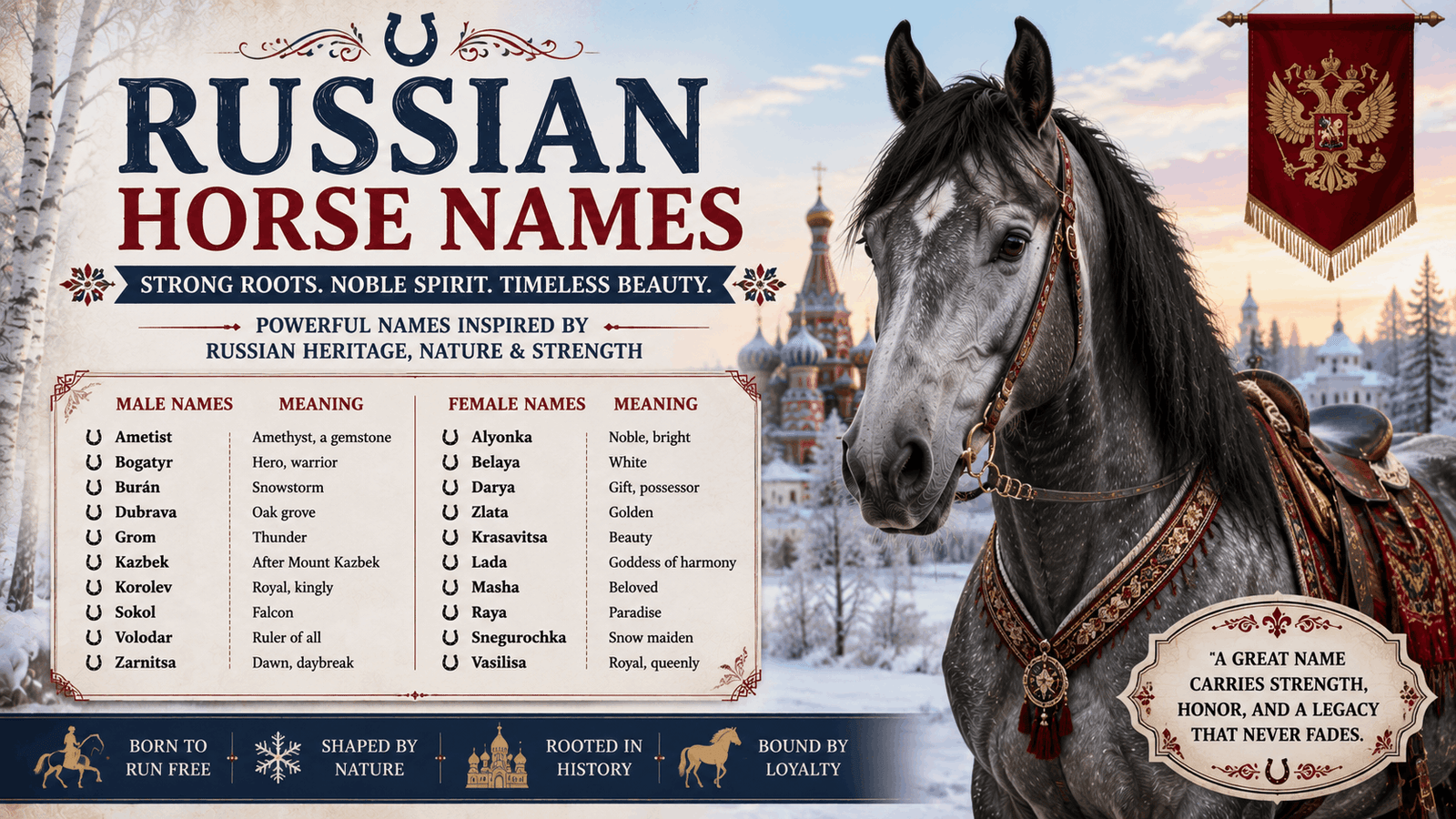
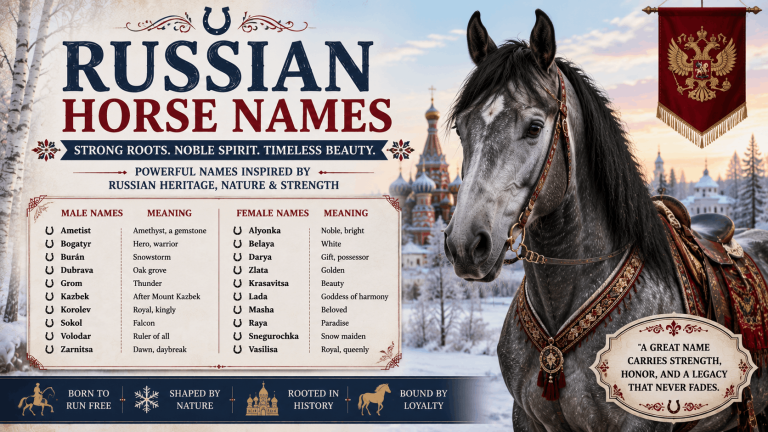
in this article, I shared with you over 110 Russian horse names picked from the Russian language, Slavic mythology, Cossack tradition, and the culture of Russia’s most celebrated horse breeds: the Orlov Trotter, the Don horse, and the Akhal-Teke. Each name includes its meaning and a note on which horse it fits best.
Popular Russian Horse Names
These names appear across Russian equestrian tradition, literature, and imperial stud records. Several were documented in 19th-century Russian horse registries and have been in continuous use since.
- Buyan: Rebel or stormy water, Russian; suits a difficult, high-energy, spirited horse.
- Grom: Thunder, Russian; a deep and powerful mover, fits a heavy-built dramatic horse.
- Zvezda: Star, Russian; a bright-marked or outstanding horse in any competitive setting.
- Vetier: Wind, Russian; fast and light, suits a horse with effortless natural speed.
- Zolotoi: Golden, Russian; palomino or golden-coated horse with a warm, shining coat.
- Vikhir: Whirlwind, Russian; fast and unpredictable, suits a reactive energetic horse.
- Snezhok: Little snowflake, Russian; a white or gray horse, particularly a smaller horse.
- Burevoi: Storm-born, Russian; powerful horse foaled during severe weather conditions.
- Oriol: Eagle, Russian variant; strong and soaring, suits a bold athletic horse.
- Zaria: Dawn, Russian; chestnut or golden horse foaled at sunrise with warm energy.
- Sokol: Falcon, Russian; fast and precise, suits a racing or competitive sport horse.
- Lad: Harmony, Russian; easy-going and well-balanced, suited for a reliable all-around horse.
Russian Male Horse Names
Male horse names in Russian tradition often draw from the natural world of the steppe: predators, weather, and geographic features of the vast open landscape that shaped Russian culture. Cossack horse names in particular leaned toward wild imagery because the Cossack relationship with horses was built on speed, endurance, and combat readiness rather than refined sport.
- Almaz: Diamond, Russian/Tatar; hard and brilliant, suits an Akhal-Teke or exceptional horse.
- Bars: Snow leopard, Russian/Tatar; powerful and rare, suits a particularly striking stallion.
- Bayan: Storyteller, Russian; expressive and communicative, suits a vocal character horse.
- Borei: North wind god, Slavic mythology; cold and powerful, suits a steppe-bred horse.
- Bystry: Swift, Russian; simple and direct, ideal for a racing or fast-moving horse.
- Dobry: Good and kind, Russian; steady and gentle, suits a beginner or therapy horse.
- Drakon: Dragon, Russian; commanding and fierce, fits a dominant competition stallion.
- Grozny: Formidable, Russian; the word Ivan used suits a horse that commands respect.
- Ignat: Fire, from the Latin ignis via Russian Orthodox tradition; fiery and intense horse.
- Kazbek: Mountain peak in the Caucasus; towering and solid, it suits a large, impressive horse.
- Krepky: Strong and solid, Russian; well-muscled and durable, suits a working stallion.
- Kudrya: Curly-haired one, Russian; suits a horse with an unusual wavy or curly coat.
- Lastochka: Swallow (masculine use), Russian; fast and darting, suits a quick, agile horse.
- Lihoi: Daring, Russian; bold and slightly reckless, suits a fearless sport horse.
- Molniya: Lightning, Russian; explosively fast, suits a sprint or racing breed of horse.
- Orkan: Hurricane, Russian/Polish; turbulent energy, suitable for a hard-to-manage talented horse.
- Povelitel: Commander, Russian; natural leader, suits a dominant herd stallion.
- Smely: Bold, Russian; confident and unafraid, it suits a horse that does not spook easily.
- Stepan: From the steppe, a Russian name; born of open land, it suits a steppe-bred horse.
- Udar: Strike or blow, Russian; powerful and impactful, fits a sport or polo horse.
You May Like More Horse Names
Russian Female Horse Names
Russian mare names draw heavily from nature, particularly the imagery of rivers, forests, and seasons that define the Russian landscape. The Russian literary tradition also gives female horse names an unusual richness: Tolstoy, Turgenev, and Chekhov all wrote horses into their works with enough care that specific mare names became culturally embedded.
The Russian word for mare, kobyla, carries a dignity in the language that the English word does not. A kobyla in Russian steppe tradition was not a lesser horse. Mares were prized for their milk, endurance, and intelligence, and naming a mare well was taken as seriously as naming a stallion.
- Belka: Squirrel or little white one, Russian; small and quick, suits a compact, lively mare.
- Bylina: Ancient epic poem, Russian; noble and historical, suits a well-bred broodmare.
- Chara: Charm or spell, Russian; captivating and beautiful, suits a show mare.
- Darya: Sea, a Russian Orthodox name; deep and steady, suits a calm, reliable mare.
- Iskra: Spark, Russian; lively and energetic, suits a quick, bright-natured young mare.
- Kalina: Viburnum berry, Russian; red-toned and seasonal, it suits a chestnut autumn mare.
- Krasavitsa: Beauty, Russian; striking appearance; suits any visually exceptional mare.
- Lastochka: Swallow, Russian; swift and darting, perfect for a fast, light-footed mare.
- Lesnaya: Forest one, Russian; calm and sheltered, it suits a mare kept in wooded terrain.
- Luna: Moon, Russian/Latin shared; luminous and calm, suits a gray or white mare.
- Mechta: Dream, Russian; gentle and aspirational, suits a hoped-for foal or gifted mare.
- Metiel: Snowstorm, Russian; wild and winter-born, suits a gray- or white-spirited mare.
- Nadezhda: Hope, Russian Orthodox; meaningful name for a mare from a difficult breeding.
- Nezhenka: Tender one, Russian; soft and gentle, ideal for a beginner horse or therapy mare.
- Pechalka: Little sorrow, Russian; quiet and deep, suits a calm, introspective mare.
- Raduga: Rainbow, Russian; a colorful marking or unusual coat pattern on a mare.
- Reka: River, Russian; flowing and persistent, suits a smooth, long-striding mare.
- Snezhana: Snow maiden, Slavic; white or pale gray coat, suits a winter-foaled mare.
- Vesna: Spring, Russian; young and renewing, suits a spring-foaled energetic young mare.
- Zorya: Morning star or dawn goddess, Slavic mythology; radiant, suits a chestnut mare.
Russian Horse Names from Slavic Mythology
Slavic mythology is one of the least explored naming traditions in horse culture and one of the most rewarding. The Slavic pantheon contains horse-specific deities, divine horses that carry gods across the sky, and mythological creatures that blur the line between horse and spirit. These names give your horse a connection to a tradition old enough to predate Christianity in Russia by centuries.
The firebird Zhar-Ptitsa, the horse-god Volos, and the solar stallions that pull the sun chariot across the Slavic sky all feed into a naming tradition that produces names unlike anything from Western European or Asian traditions. They are genuinely unfamiliar to most English-speaking horse owners, which means your horse will carry a name almost nobody else at the barn will have heard.
- Volos: God of cattle, horses, and the underworld, Slavic; ancient and powerful for any horse.
- Zhar: Fire-bird flame, Slavic; brilliant and rare, suits an Akhal-Teke or exceptional horse.
- Perun: Thunder god, Slavic mythology; dominant and powerful, suits a commanding stallion.
- Marzanna: Winter and death goddess, Slavic; suits a dark-coated horse with a mysterious quality.
- Zorya: Guardian dawn goddess, Slavic; protective and radiant, suits a brave, reliable mare.
- Veles: God of the underworld and wild animals, Slavic; deep and primal, suits a dark horse.
- Stribog: Wind god, Slavic; fast and dispersing, suits an especially quick horse.
- Polkan: Horse-man warrior of Slavic epic; half-horse strength, suited to a powerful stallion.
- Svarog: Sky and fire god, Slavic; forge-strong and hot, suits a fiery chestnut stallion.
- Mokosh: Earth mother goddess, Slavic; fertile and grounded, suits a productive broodmare.
Russian Horse Names from Famous Breeds and Racing History
The Akhal-Teke deserves specific mention here because its coat is genuinely unlike any other horse breed. The metallic sheen comes from the hollow, light-refracting structure of the hair shaft itself.
Horses of this breed have been documented in Turkmenistan for over 3,000 years, and their names in traditional Turkmen culture followed specific naming ceremonies that no Western guide has yet fully documented. The names below draw from both Russian and Turkmen traditions associated with this breed.
- Akhal: From the Akhal-Teke breed name, Turkmen; direct tribute to one of the oldest breeds.
- Budyon: From the Budyonny breed, Russian military; strong and service-ready working horse.
- Donskoi: From the Don River, Cossack tradition; endurance-bred, it suits a trail or distance horse.
- Krepysh: Famous Russian Trotter racehorse name, early 20th century; suits a harness racing horse.
- Orlov: From Count Orlov’s trotting breed; distinguished lineage, suits any trotting sport horse.
- Smena: Shift or change, a Russian racing tradition; suits a horse that changes pace dramatically.
- Teke: From the Akhal-Teke breed name; ancient and metallic, it suits a shining-coated horse.
- Zhuravl: Crane bird, Russian; long-legged and elegant, suits a tall, fine-boned horse.
- Kholstomer: A Famous literary Orlov Trotter name from Tolstoy; suits an underestimated horse.
- Kvart: Historical Orlov stud name; classical and distinguished, suits a registered sport horse.
How to Choose a Russian Horse Name
Russia produced two of the most culturally significant horse breeds in equestrian history. The Orlov Trotter, developed by Count Alexei Orlov in the 1770s at his Khrenovsky stud farm, was the first breed specifically developed for harness racing performance.
The Akhal-Teke, from Turkmenistan’s border region with southern Russia, is considered by many horse historians to be one of the oldest and purest breeds alive today, with a metallic coat sheen that makes it visually unlike any other horse on earth.
I read Tolstoy’s Kholstomer as a teenager and assumed it was fiction that borrowed a horse’s name for drama. It was not until I researched Russian equestrian history seriously that I understood Kholstomer was based on a real Orlov Trotter and that the story reflected genuine practices of the imperial Russian stud system.
The detail that stayed with me was this: Russian aristocratic families gave their horses names with the same deliberate care they gave their children, often drawing from Orthodox saint names, natural imagery, or virtue words that carried specific prayers inside them.
If your horse is an Orlov Trotter, Don horse, or any breed with Russian or Central Asian lineage, a Russian name carries specific cultural accuracy. The Orlov breed was bred for speed and stamina in cold conditions, and names reflecting endurance, winter, and controlled power suit that tradition.
If your horse is high-strung and difficult, Russian names drawn from storm and fire imagery give the energy somewhere to go. Buyan (rebel or rough water), Vikhir (whirlwind), and Grom (thunder) are all historically documented Russian horse names from the imperial stud records.
If your horse is steady and reliable, Slavic virtue names like Vierny (faithful), Smely (bold), and Udaloi (daring but honorable) suit a working partnership horse that you depend on daily.
Conclusion
Russian horse names give you access to a naming tradition that goes back further than almost any other on Earth. The steppe where the domesticated horse was born is the same landscape that produced the Orlov Trotter, the Cossack cavalry tradition, and the Slavic mythology that built names like Perun, Zorya, and Veles.
These are not borrowed aesthetics. They are names from the culture that stood closest to horses at the very beginning.
The single most useful reframe from Russian naming tradition is this: names were chosen to carry something forward, not just describe what was already there. Nadezhda means hope. “Mechta” means “dream.” “Dobry” means goodness.
Russian horse names at their best are not descriptions. They are intentions. Choose one for what you want your horse to become, and the name will do part of the work for you every time you say it.
FAQs

About Me
I’m Daniel Carter, an equine researcher and horse-naming specialist at newHorseNames.com. I focus on creating meaningful and authentic horse names using trusted equine resources, breeder records, and expert insights. My research covers horse bloodlines, behavior, and naming traditions to ensure each name reflects true identity and purpose. Through accurate, well-researched content, I aim to help horse owners and breeders find distinctive and reliable names they can trust.