Native American Horse Names With Deep Meaning
Quick Takeaways
Picking a Native American name for your horse feels exciting at first, then quickly turns into a wall of lists with no explanations. You find “Chayton” or “Koda” on ten different sites, but nobody tells you what those names actually mean, which tribe they come from, or if they suit a dappled gray mare versus a dark bay stallion. That gap is exactly what makes this search frustrating.
The problem runs deeper than missing translations. Most lists treat Native American Horse Names as aesthetic choices, like picking a font. They strip the cultural meaning entirely, leaving you with a name that sounds great at the barn but carries nothing behind it. For anyone who wants to give their horse a name with real weight, that approach falls short every time.
in this article, I shared with you over 100 Native American horse names with meanings, cultural notes, and specific guidance on matching names to coat color, gender, and personality. We also cover how to choose a name your horse will actually respond to during training and daily life at the stable.
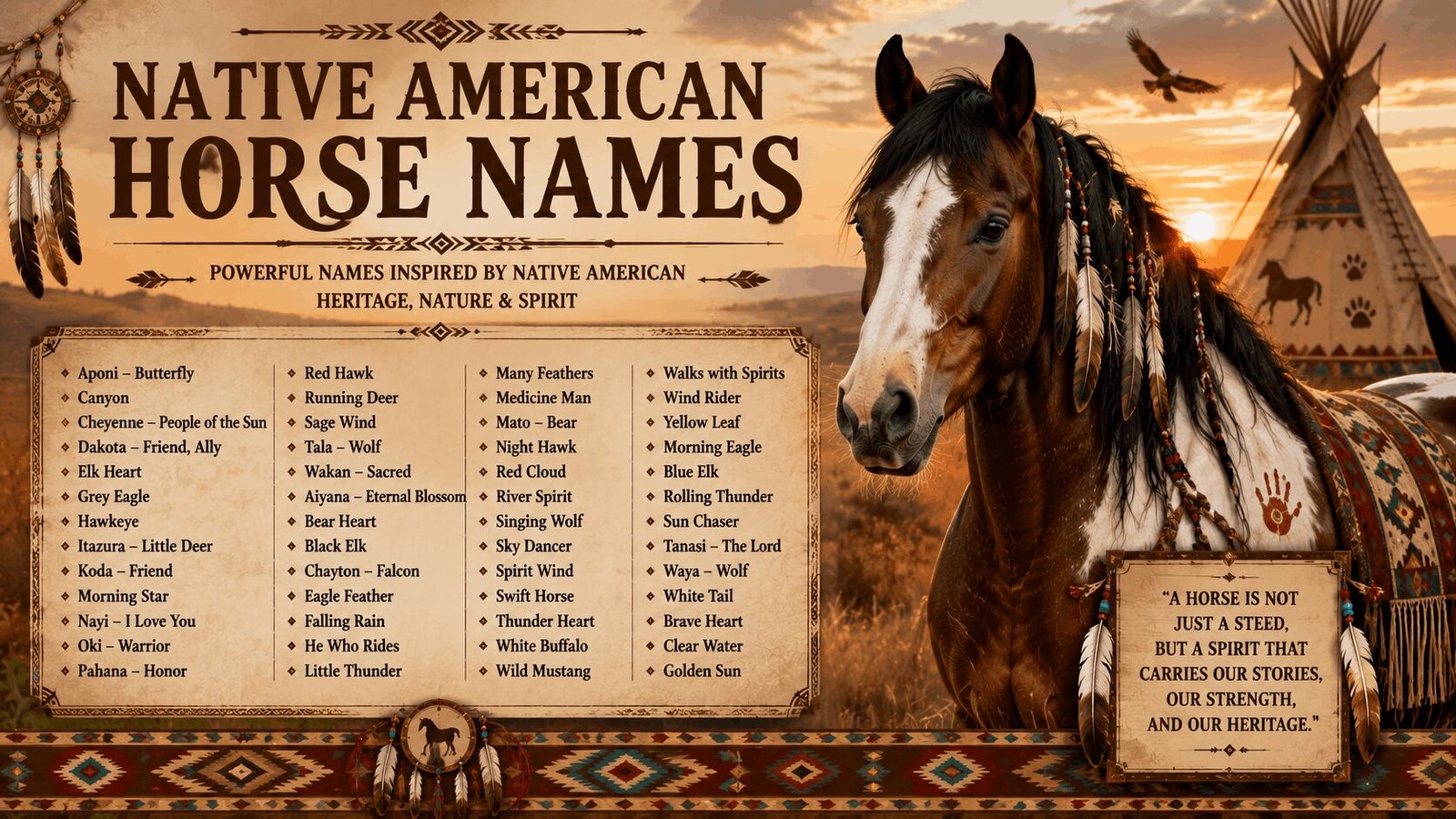
How to Choose a Native American Name for Your Horse
Most guides tell you to pick a name you love the sound of. That is only partially true. The fuller picture is that a horse name functions as a working word, not just a label, and the names that work best in real life are short, clear, and easy to call across a pasture at dusk.
I learned this the hard way with my second horse, a Thoroughbred rescue I named “Tahtonka” after falling in love with the Lakota word for buffalo. The name felt powerful on paper. In practice, three syllables with a hard stop in the middle made it awkward to call sharply during groundwork sessions. After six weeks, everyone at the barn had shortened it to “Tank,” which had nothing to do with the original meaning. The lesson stuck with me: a name lives in the mouth as much as it lives on paper.
If your horse is young and still in training, choose a name with one or two syllables, particularly if you are working on voice commands around the stable. Short names cut through noise and register faster for the horse. If your horse is older and already responds to a name, consider using the Native American name as a registered or show name while keeping a shorter call name for daily use.
If you want to honor a specific tribe or region, research the language group first. Lakota, Cherokee, Navajo, Comanche, and Apache each have distinct languages, and a name from one tradition does not belong to all of them. This matters more than most people expect, especially if you plan to use the name publicly or in competition.
Coat color gives you a natural starting point. Many Native American horse names reference natural elements like fire, shadow, earth, and sky, and those map well onto specific coat colors. A red roan pairs naturally with fire-related names. A black horse suits shadow or night imagery. A palomino aligns with sun and gold references.
Gender shapes the choice too, though less rigidly than many people assume. Some names are traditionally masculine or feminine within their language of origin, while others are neutral. We have flagged these distinctions in the lists below.
Personality and movement offer the most personal angle. If your horse runs with a specific gait, carries itself with unusual elegance, or has a quirky habit, a name that reflects behavior often fits better than one based on appearance alone, more so than most people expect when they start the naming process.
Popular Native American Horse Names
Popular Native American Horse Names appear often because they have clear meanings, sound strong, and translate well into daily, stable life. Their popularity is earned.
Native American Horse Names Based on Animals
Animal names in these traditions speak to instinct and character, not just appearance. A horse named for a hawk is sharp and precise the way a hawk is precise.
- Honiahaka: Little wolf, Cheyenne; perfect for a small but bold, fearless horse.
- Makwa: Bear, Ojibwe; suits a solid, heavy-framed horse with steady energy.
- Kangee: Raven, Lakota; ideal for a black horse with a glossy, striking coat.
- Citlali: Star or hummingbird spirit, Nahuatl; best for a small, quick mare.
- Ohanko: Reckless wild horse, Lakota; fits a high-energy, difficult-to-settle horse.
- Tatanka: Buffalo, Lakota; suits a broad, slow-moving, heavily built horse.
- Sunka: Loyal dog companion, Lakota; great for a deeply bonded, faithful horse.
- Chatan: Hawk, Sioux; alert and responsive, fits a competitive sport horse.
- Shunkaha: Wolf-like, Lakota; suits a watchful horse that keeps to itself.
- Ptecila: Small buffalo, Lakota; fits a compact, stocky, strong-built horse.
- Honon: Bear, Miwok; large and protective, suits a confident lead horse.
- Mahpiya Luta: Red eagle, Lakota; chestnut or bay with bold white markings.
- Elsu: Swooping falcon, Algonquin; fits a horse with sharp turns and speed.
- Enoli: Black fox, Cherokee; clever and quick, perfect for a dark-coated horse.
- Tashunka: Horse or sacred dog, Lakota; an honest tribute name for any horse.
Native American Horse Names Based on Nature
Nature names carry a built-in visual quality that works especially well for horses with striking markings or unusual coloring. They tell a small story without overreaching.
Native American Female Horse Names
Mare names benefit from fluid sounds that carry well when called across a pasture. Vowel endings travel better than hard consonants in open space, particularly if you are working without a microphone during events.
Native American Male Horse Names
Stallion and gelding names benefit from strong consonant sounds that carry authority during horse training commands. That sharp edge holds attention in a noisy stable or competition ring.
- Akando: Ambush, Sioux; suits a reactive, explosively fast-moving horse.
- Bidziil: Strong, Navajo; ideal for a muscular, heavily built stallion.
- Dasan: Leader of the crane clan, Pomo; natural fit for a lead horse in a group.
- Elan: Friendly and spirited, Algonquin; versatile and suits any easy-going gelding.
- Hania: Spirit warrior, Native American; fits a bold, competitive sport horse.
- Hassun: Stone, Algonquin; stubborn but durable, it suits a tough, hard-working horse.
- Helaku: Full of sun, Native American; palomino or bright chestnut stallion.
- Howi: Turtle dove, Miwok; a slow, steady, and deeply reliable gelding.
- Huslu: Shaggy bear, Miwok; horse with a thick, heavy winter coat.
- Igasho: One who wanders, Native American; fits a horse that tests every fence line.
- Istu: Pine sugar, Miwok; sweet-tempered and easy to work with daily.
- Lansa: Lance, Hopi; a tall, lean, upright horse with a proud carriage.
- Mahkah: Earth, Sioux; grounded personality, suits a calm and steady horse.
- Nayati: Wrestler, Native American; strong and competitive, fits a sport horse.
- Nodin: Wind, Ojibwe; fast over open ground, suits a free-moving horse.
- Sike: He is sitting there, Navajo, calm and unbothered, suited to a patient horse.
- Tokala: Fox, Lakota; clever and nimble, suits a quick-thinking horse.
- Yahto: Blue, Lakota; blue roan or gray horse with a cool-toned coat.
- Akecheta: Fighter, Sioux; competitive and driven, suits a sport or racing horse.
- Napayshni: Strong and courageous, Sioux; best for a bold war-horse-type breed.
Native American Horse Names Inspired by Literature
These names moved through written works and historical accounts before landing in popular use. They carry both cultural meaning and a layer of narrative that gives them extra depth.
- Hiawatha: He who makes rivers, a Longfellow poem; suits a strong river-crossing trail horse.
- Uncas: Fox or silver tongue, Last of the Mohicans; clever and quick-witted horse.
- Geronimo: Derived from Apache tradition, historical; daring and athletic competition horse.
- Sequoyah: Sparrow, a Cherokee historical figure; a one-of-a-kind horse with a distinctive character.
- Sacajawea: Bird woman, Shoshone history; ideal for a reliable long-distance trail horse.
- Pocahontas: Playful one, Powhatan history; bold and spirited mare with personality.
- Crazy Horse: Spirited horse, Lakota history; powerful name for a standout show horse.
- Sitting Bull: Patient, slow bull, Hunkpapa Lakota; dignified and steady performance horse.
Native American Royal Horse Names
These names carry the weight of leadership, ceremony, or high status within their language traditions. They suit horses that compete at a high level or carry themselves with obvious presence in any setting.
- Dohasan: Little bluff, Kiowa; commanding presence, suits a strong-willed show horse.
- Haokah: Thunder and war god, Sioux; dramatic and powerful-looking competition horse.
- Kaga: Chronicler or writer, Sioux; suits a horse used in ceremony or public events.
- Mahpee: Sky, Sioux; gray or blue roan horse with an open, airy quality.
- Oglala: Scatters their own, Lakota; an independent horse that resists being grouped.
- Ohitika: Brave, Lakota; ideal for a sport horse or show jumper with heart.
- Sunkmanitu Tanka: Great spirit wolf, Lakota; reserved for a truly exceptional horse.
- Wahkan: Sacred, Sioux; fits any exceptional horse regardless of breed or color.
- Chesmu: Gritty, Native American show horse that wins through effort and persistence.
- Adaeze: King’s daughter, cross-cultural; high-status name for a prized broodmare.
Funny Native American Horse Names
Humor has always lived inside naming traditions. Several names carry meanings that land quietly funny when applied to a horse with a contradictory personality. These are best for bar culture, where people go the extra mile to make each other laugh.
- Chumani: Dew drops, Sioux; hilarious on a horse that drools constantly.
- Hotah: White and calm, Sioux; ironic name for the horse that is anything but calm.
- Hanska: Tall one, Sioux; use it on your shortest horse for maximum effect.
- Kele: Sparrow, Hopi; brilliant on a draft horse or large heavy breed.
- Lootah: Red, Sioux; perfectly ironic on a gray or white horse.
- Ohanzee: Shadow, Sioux; fits a horse that follows you every step you take.
- Tatanka: Buffalo, Lakota; funniest on a miniature horse or small pony.
- Wakanda: Inner magical power, Sioux; ideal for a horse scared of puddles and flags.
- Zyanya: Always and forever, Zapotec; fits a horse that never stops pestering you.
- Isi: Deer, Choctaw; use it on a horse that trips over flat ground regularly.
Here is where the choice gets personal and where most naming guides cut corners. A name drawn from your horse’s actual behavior or daily personality tends to outlast a name chosen purely for how it sounds. A horse named for its coat fades into the background as the coat changes with seasons. A horse named for what it actually does stays accurate forever.
Elegant Native American Horse Names
These names carry natural elegance in their sound structure, particularly names from Navajo, Cherokee, and Algonquin traditions where vowel sounds move together smoothly. They suit horses shown in dressage, breed shows, or any setting where the name gets announced publicly.
Native American Mythological Names
Mythology gives you names that carry entire stories. These are the names that make people stop and ask questions, which opens up a chance to share something real about the horse and where the name comes from.
- Iktomi: Spider trickster, Lakota; clever and unpredictable, suits a mischievous horse.
- Kokopelli: Hump-backed flute player, Hopi; joyful spirit, fits a lively musical horse.
- Napi: Old man trickster, Blackfoot; older horse with a big, memorable personality.
- Sedna: Sea goddess, Inuit; blue roan mare kept near water, striking and mysterious.
- Thunderbird: Supernatural eagle, many tribes; large, dramatic horse with presence.
- Tirawa: Creator spirit, Pawnee; meaningful name for a first foal from a prized mare.
- Wakan Tanka: Great Spirit, Lakota; reserved only for a truly once-in-a-lifetime horse.
- Windigo: Forest spirit, Algonquin; suits a horse with a wild, unpredictable streak.
- Asgaya Gigagei: Red thunder being, Cherokee; rare and powerful, suits an exceptional horse.
- Skinwalker: Shape-shifter, Navajo; multi-colored or unusual coat with a mysterious quality.
Famous Native American Horse Names Based on Cities or States
Place names from Native American languages have filtered so deeply into American geography that most people never notice their origins. These carry regional pride alongside real historical meaning, particularly if your horse was bred in or associated with a specific state.
Native American Horse Names Based on Gods and Heroes
These names carry the full weight of cultural tradition. Use them with real knowledge of who or what they represent, not just the sound of the name, particularly if the horse will carry it publicly or in competition.
- Achak: Spirit, Algonquin; calm and centered, suits a grounding, stable companion horse.
- Ahote: Restless one, Hopi; difficult to settle, suits an energetic, hard-to-focus horse.
- Akna: Mother of birth, Mayan; a meaningful and powerful name for a broodmare.
- Alo: Spiritual guide, Hopi; leads naturally, suits a calm and steady lead horse.
- Chayton: Falcon warrior, Lakota; a racing horse or competitive sport horse with speed.
- Hania: Spirit warrior, Native American; bold and driven, fits a top competition horse.
- Maka Ina: Mother Earth, Lakota; grounded and nurturing, suits a pastured broodmare.
- Kiona: Brown hills, Native American; brown-coated horse in hilly or rolling terrain.
- Tse: Rock, Navajo; unmovable and steady, suiting a durable, hard-working horse.
- Ohitika: Brave, Lakota; competitive heart, ideal for a show jumper or eventer.
Native American Horse Names from TV and Film
These names come from characters and animals in productions that drew directly from Native American culture. Some carry historical weight; others are fictional but culturally grounded enough to hold up.
- Spirit: Spirit Stallion of the Cimarron; iconic, best for a wild and free-spirited horse.
- Rain: Spirit Stallion of the Cimarron; quiet and faithful, suits a loyal, calm mare.
- Tonto: The Lone Ranger; note that “tonto” means “fool” in Spanish, worth knowing before using.
- Kaya: American Girl Kaya series; warm and brave, suits a young mare or first horse.
- Comanche: A Historical horse featured in films; survivor name, best for an endurance horse.
- Wind Dancer: Native American animated series; suits a horse with an unusually floating gait.
- Thunderhoof: Native American animated feature; large-hoofed draft or heavy-breed horse.
You May Like More Horse Names
Native American Horse Names Inspired by Famous Native Americans
Naming a horse after a historical figure carries responsibility. Use these with real knowledge of who these people were. Each person below made decisions that shaped their people’s story under impossible circumstances, and a horse carrying their name should reflect something of that character.
Cool Native American Horse Names
Cool names work because they sit at the intersection of strong meaning, clean pronunciation, and memorable sound structure, not because they are unusual for the sake of it.
A Note on Using These Names With Respect
These names come from living cultures, not historical artifacts. The Lakota, Navajo, Cherokee, Comanche, and dozens of other nations represented here are active communities with real relationships to their languages. Using a name with respect means knowing what it means and where it comes from.
This is not a reason to avoid these names. It is a reason to choose one and actually know its story. A horse named Tashunka carries something real because “Tashunka” is the Lakota word for “horse,” with a history behind it. A made-up combination of syllables that sounds loosely “Native” carries nothing but the appearance of meaning. That distinction is worth drawing before you settle on a name, not after.
Conclusion
The names in this article are not interchangeable decorations. Each sits inside a specific language, a specific cultural moment, and often a specific landscape. A Navajo name carries the sound of desert wind. A Lakota name grew out of the Great Plains. Matching a name to your horse means thinking past coat color, though coat color is still a perfectly solid place to start.
The shift worth making is treating the name as a relationship word rather than a label. You will say this name across hundreds of training sessions, stable mornings, and pasture walks. It will live in your mouth as much as on any registration document or American Stud Book entry. The names that stand the test of time are the ones that feel true to the horse you actually have.
If you are still deciding, start with the category that matches your horse’s most obvious quality, whether that is movement, coat, personality, or temperament. Read the name in that section out loud. The right name tends to announce itself.
if you love this article, please share it with your horse-owner friends and mates.
FAQs

About Me
I’m Daniel Carter, an equine researcher and horse-naming specialist at newHorseNames.com. I focus on creating meaningful and authentic horse names using trusted equine resources, breeder records, and expert insights. My research covers horse bloodlines, behavior, and naming traditions to ensure each name reflects true identity and purpose. Through accurate, well-researched content, I aim to help horse owners and breeders find distinctive and reliable names they can trust.