Mexican Horse Names: 100+ Authentic Names With Meanings
Quick Takeaways
You already searched “cool horse names” and got the same recycled English list everyone else gets. Then you searched specifically for Mexican horse names and found five articles that give you “Fuego” and “Diablo” on repeat, as if those were the only two words that exist in the Spanish spoken across centuries of Mexican horse culture.
That dead end is genuinely frustrating when you have a horse that deserves better than the first word off a hot sauce label.
Mexico has one of the deepest horse cultures in the Western Hemisphere. The charreada, Mexico’s national sport, predates American rodeo by centuries.
The Aztec civilization had no horses before Spanish contact in 1519, but within a generation, indigenous riders had absorbed horsemanship so completely that the horse became central to every aspect of Mexican rural life. Names from that culture carry layers of meaning that a generic list will never reach.
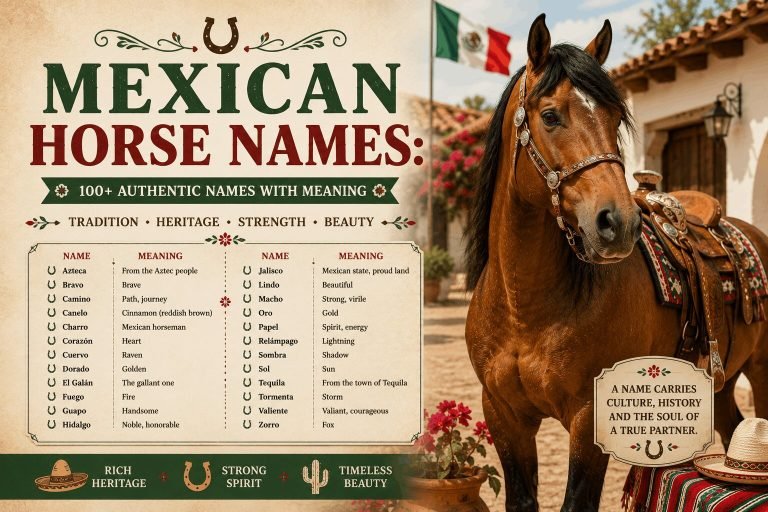
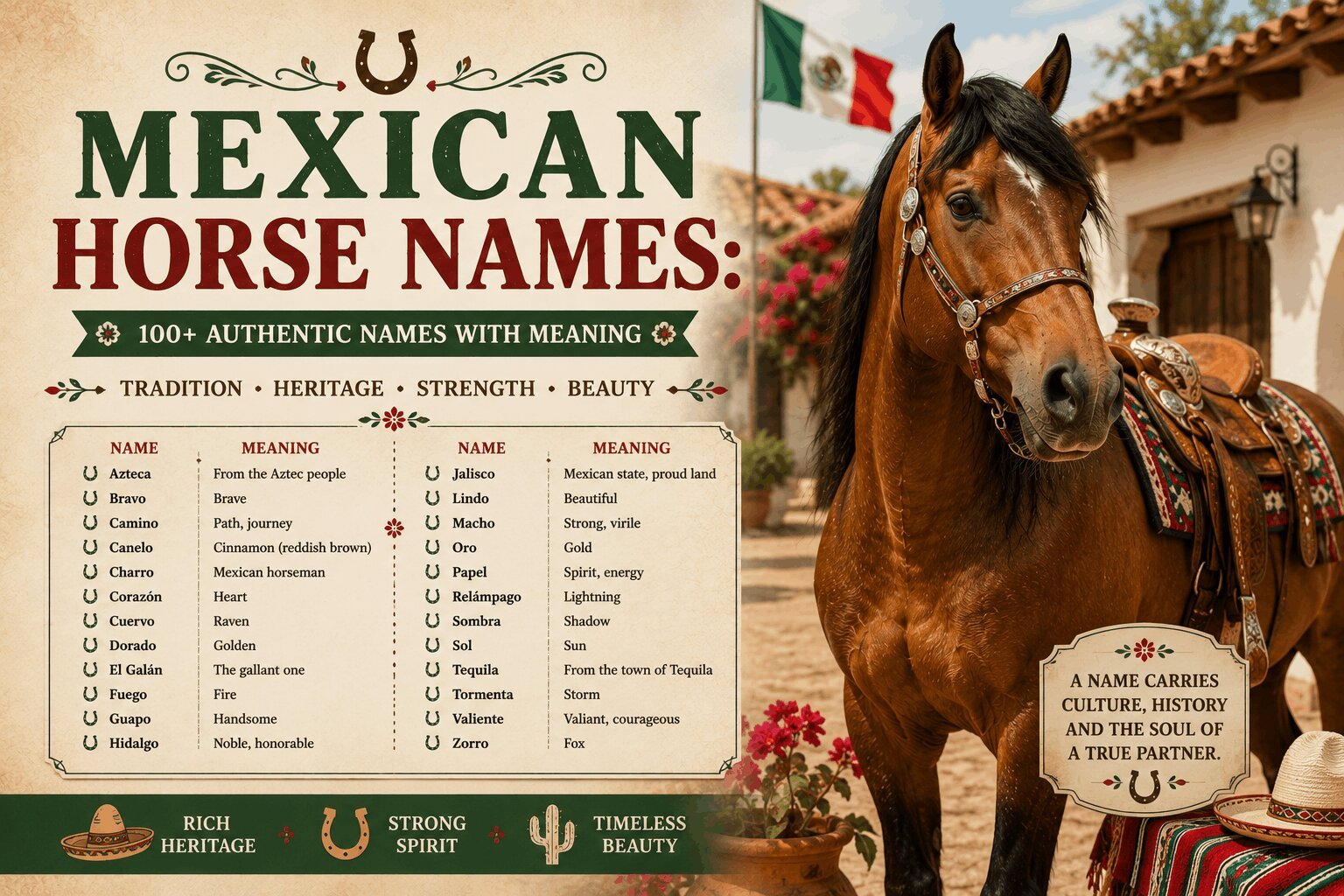
in this article i shared with you over 100 Mexican horse names selected from Spanish language tradition, Nahuatl (the Aztec language still spoken by 1.7 million people in Mexico today), regional geography, and charro culture. Each name includes its meaning and a short note on which horse it suits best.
How to Choose a Mexican Horse Name
The charro tradition gives us a useful framework here. In charreada competition, a horse’s name often reflects either its physical quality, its regional origin, or a virtue the rider wants to honor. A horse called Valiente is expected to live up to that name in the ring. A horse called Tormenta carries the expectation of power and unpredictability. The name functions as a statement of character, not just identification.
I spent three days at a charreada event in San Antonio watching the horse introductions alone. Every single horse announced had a name that told you something before the animal moved a step. Trueno came out already living up to thunder. Paloma moved exactly like her name suggested. That connection between name and character was not accidental. The charro tradition treats naming as the first act of horsemanship, not an afterthought.
If your horse has Aztec or pre-colonial ancestry through breeds like the Azteca, a Nahuatl name carries specific cultural accuracy. The Azteca breed was developed in Mexico in 1972 by crossing Andalusian stallions with Quarter Horse and Criollo mares. Giving an Azteca horse a Nahuatl name is one of the most fitting choices you can make, particularly if the horse will compete in charreada events.
If your horse is a working ranch horse, Spanish virtue names like Fiel (faithful), Bravo (brave), or Noble suit the expectation of reliable daily work better than dramatic mythological names.
If you want a name that travels well across English and Spanish-speaking barn communities, choose something pronounceable in both languages. Cielo, Luna, and Bravo work in any barn conversation without explanation.
Popular Mexican Horse Names
These names appear across Mexican ranches, charreada arenas, and equestrian registries because they carry strong meanings and sound clean when called across an open pasture or announced in competition.
- Fuego: Fire, Spanish; suits a chestnut or fiery-tempered spirited horse.
- Cielo: Sky or heaven, Spanish; ideal for a gray or blue roan with airy movement.
- Bravo: Brave and fierce Spanish, confident horse that performs well under pressure.
- Tormenta: Storm, Spanish; powerful and unpredictable, suits a bold, high-energy horse.
- Paloma: Dove, Spanish; calm and graceful, perfect for a smooth white or gray mare.
- Trueno: Thunder, Spanish; loud mover with heavy hooves, suits a big impactful horse.
- Libertad: Freedom, Spanish; a free-spirited horse that resists containment naturally.
- Relámpago: Lightning, Spanish; explosively fast horse, excellent racing or sprint name.
- Guerrero: Warrior, Spanish; strong and competitive, suits a charreada or sport horse.
- Corazón: Heart, Spanish; brave and willing, fits a horse that always gives full effort.
- Sombra: Shadow, Spanish; dark-coated and quiet-moving, suits a black or dark bay horse.
- Noche: Night, Spanish; solid black coat with a calm, steady nighttime presence.
You May Like More Horse Names
Mexican Male Horse Names
Male horse names in Mexican tradition often draw from virtue, strength, natural forces, and the charro ideal of controlled power. A charro stallion is expected to be both fierce and obedient, and the best names reflect that balance.
Mexican Female Horse Names
Mare names in Mexican tradition lean toward nature, beauty, and spiritual imagery. Many of the most beloved mares in charreada history carried names drawn from flowers, celestial bodies, and the natural landscape of central Mexico.
- Luna: Moon, Spanish; night-foaled or gray mare with a calm lunar quality.
- Estrella: Star, Spanish; a bright-marked or outstanding mare, suitable for a show mare.
- Rosa: Rose, Spanish; gentle and beautiful, suits a pink-nosed chestnut mare.
- Flor: Flower, Spanish; delicate and pretty, fits a fine-boned, elegant mare.
- Tierra: Earth, Spanish; grounded and steady, suits a dependable working mare.
- Aurora: Dawn, Spanish; a golden or chestnut mare foaled in the early morning.
- Bella: Beautiful, Spanish; classic and clean, suits any visually striking mare.
- Canela: Cinnamon, Spanish; warm red-brown coat, perfect for a sorrel or chestnut mare.
- Chispa: Spark, Spanish; lively and spirited, suits a quick, excitable young mare.
- Dulce: Sweet, Spanish; gentle-tempered and easy, ideal for a beginner’s horse.
- Esperanza: Hope, Spanish; a horse rescued or foaled after a difficult breeding season.
- Gitana: Gypsy woman, Spanish; wandering and free, suits a spirited independent mare.
- Isadora: Gift of Isis, Spanish/Greek; exotic and elegant, suits a refined breeding mare.
- Lluvia: Rain, Spanish; gray mare with a soft, gentle, fluid movement quality.
- Mariposa: Butterfly, Spanish; unusual markings or spotted coat, suits a pinto mare.
- Perla: Pearl, Spanish; white or gray mare with a luminous coat quality.
- Primavera: Spring, Spanish; young, fresh, and lively, suits a young spirited mare.
- Reina: Queen, Spanish; dominant herd mare with visible authority and presence.
- Selena: Moon goddess, Spanish/Greek; elegant and luminous, suits a gray show mare.
- Xóchitl: Flower, Nahuatl; ancient and authentic, suits an Azteca mare beautifully.
Mexican Horse Names from Nahuatl
Nahuatl is the language of the Aztec empire, spoken continuously in Mexico from before Spanish contact to the present day. These names carry pre-colonial weight that Spanish names simply cannot replicate. If you have an Azteca breed horse, a Criollo with Mexican lineage, or simply want something genuinely rooted in Mexican soil, Nahuatl delivers names that no other tradition offers.
The unexpected fact worth knowing here is that dozens of everyday English words came from Nahuatl through Spanish: chocolate, tomato, avocado, and coyote all trace back to this language. These names are not obscure or invented. They are ancient, alive, and still spoken daily.
- Citlali: Star, Nahuatl; bright and singular, suits a standout mare with presence.
- Cuauhtli: Eagle, Nahuatl; powerful and soaring, suits a bold athletic horse.
- Ehecatl: Wind god, Nahuatl; fast and elusive, suits an unusually quick horse.
- Itzli: Obsidian knife, Nahuatl; sharp and dark, suits a black horse with an edge.
- Metztli: Moon, Nahuatl; pale and luminous, suits a gray or white mare.
- Mixcoatl: Cloud serpent war god, Nahuatl; a dramatic name for a competition stallion.
- Ocelotl: Jaguar, Nahuatl; spotted coat or fierce temperament suits an Appaloosa.
- Quetzal: Sacred feathered bird, Nahuatl; rare and beautiful, suits an exceptional horse.
- Tezca: Smoking mirror, Nahuatl; dark and mysterious, suits a black or dark bay horse.
- Tonatiuh: Sun god, Nahuatl; gold or chestnut horse with a warm, commanding presence.
- Xipe: Renewal god, Nahuatl; horse that recovered from injury or illness and returned.
- Yaotl: Warrior or rival, Nahuatl; competitive and fierce, suits a sport stallion.
Mexican Horse Names Inspired by Charro Culture and Geography
The charreada is not just a sport. It is a living cultural institution recognized by UNESCO as an Intangible Cultural Heritage of Humanity. The horses used in charreada competition carry names that reflect regional pride, landscape, and the specific skills the charro tradition demands.
Geography also plays a role here that most naming guides never touch. Mexico’s landscape ranges from high desert in Chihuahua to tropical lowlands in Veracruz, and place-based names carry regional identity that matters to breeders and charro families who have worked specific land for generations.
- Jalisco: Central Mexican state, home of the charro tradition; suits a well-bred Azteca.
- Chihuahua: Northern desert state, home of the Chihuahuan horse breed; suits a tough desert horse.
- Durango: Northern mountain state; strong and enduring, suits a hardy trail horse.
- Bajío: Fertile heartland region of Mexico; grounded and productive, suits a ranch mare.
- Sierro: From the sierra mountains, Spanish; rugged and sure-footed, suits a mountain horse.
- Llano: Flat plains, Spanish; open and free-moving, suitable for a plains-bred ranch horse.
- Charrería: Charro horsemanship tradition; tribute name for a charreada competition horse.
- Mariachi: Mexican musical tradition; lively and expressive, it suits a showy performing horse.
- Rancho: Ranch, Spanish; working and dependable, suits a reliable cattle horse.
- Hacienda: Estate, Spanish; elegant and well-kept, suits a refined breeding stallion.
Conclusion
Mexican horse names give you access to three distinct naming traditions in one culture: Spanish colonial language, Nahuatl pre-colonial history, and charro regional identity. That range means you can find a name that fits a thundering competition stallion, a quiet ranch mare, or a fine-bred Azteca show horse without reaching for something generic.
The most useful thought to carry forward is this: the charro tradition treats a horse’s name as the opening statement of its character. Everything the horse does afterward either honors or contradicts that name. Start with what you actually see in the horse and work backward to the word that fits. The right name, in any language, is always the one that tells the truth.
FAQs

About Me
I’m Daniel Carter, an equine researcher and horse-naming specialist at newHorseNames.com. I focus on creating meaningful and authentic horse names using trusted equine resources, breeder records, and expert insights. My research covers horse bloodlines, behavior, and naming traditions to ensure each name reflects true identity and purpose. Through accurate, well-researched content, I aim to help horse owners and breeders find distinctive and reliable names they can trust.