80+ Best Buckskin Horse Names
Quick Takeaways
You searched for buckskin horse names and landed on the same list recycled across a dozen sites. Butterscotch. Goldie. Tawny. The same words, in the same order, with no explanation of why any of them fit a buckskin specifically. That is not a resource. That is a copy-paste job with a headline.
The frustration is real because the need is real. Naming a horse is a long-term decision. A barn name sticks for twenty-five years. A registered show name follows a horse into every program, every record, and every sale document. Choosing from a random word pile with no context is how people end up with regrets, particularly when they realize six months later that the name fits the coat but misses the horse entirely.
I put this guide together to fix that. Names are organized by what actually matters: coat color, personality, mythology, food, nature, gems, and more. Each name includes a brief note on what makes it a good fit for a buckskin, and the tips section at the end explains how to choose, not just what to pick.
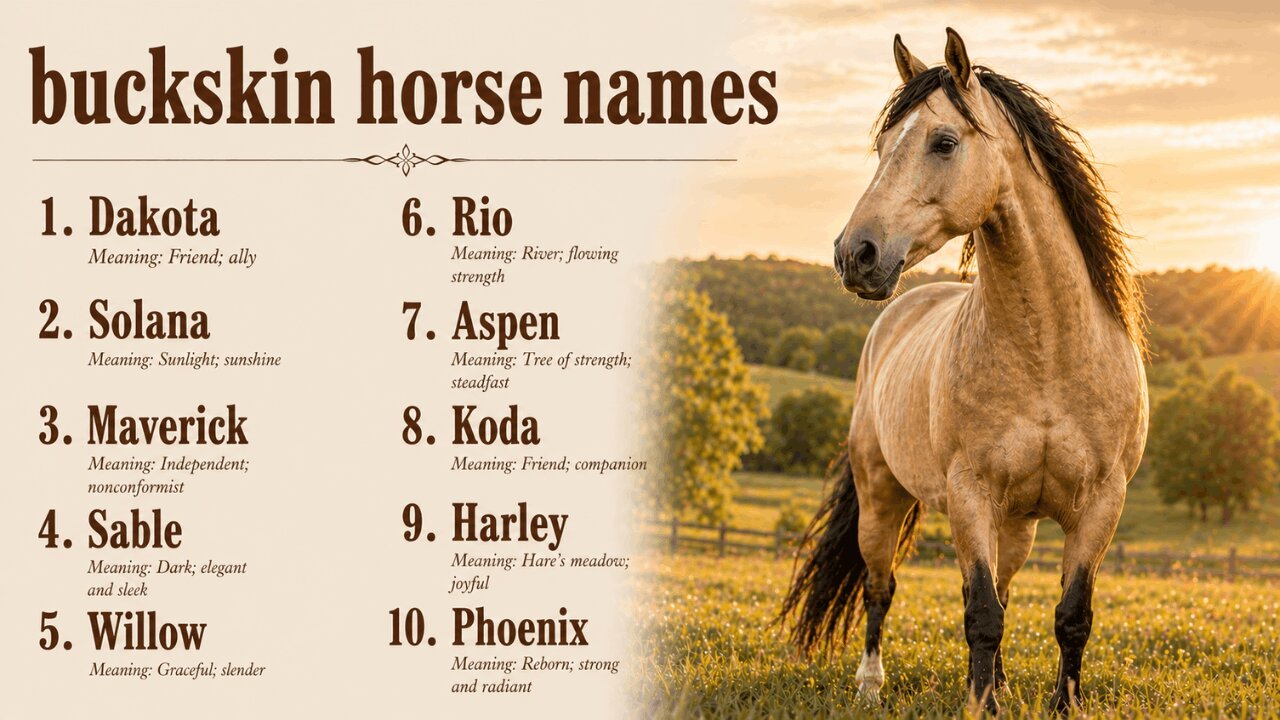
Famous Buckskin Horse Names
Some of the most recognized horses in Western history and film were buckskins. Names drawn from this tradition carry a sense of lineage that purely aesthetic names cannot provide, which is why I find this category so useful and so frequently skipped by other guides.
If you ride Western or your horse works cattle, these names fit the context without any explanation needed.
A Quick Word on Buckskin Coloring
Buckskin is a coat color, not a breed. It appears when a horse carries one copy of the cream gene on a bay base coat. The result is a golden or tan body with black mane, tail, and lower legs. Those dark legs and mane are called “black points,” and they are part of what makes a well-chosen color-based name so satisfying when it acknowledges the contrast.
Important Tip
Here is something most naming guides skip entirely: some buckskins carry both the cream gene and the dun gene, producing what geneticists call a “buckskin dun.” These horses show primitive markings such as leg barring and a shoulder shadow in addition to the dorsal stripe.
If your horse has faint striping along the legs, that is ancient genetic memory, not a grooming problem. It is also worth noting that coat shade ranges from pale champagne to deep amber-gold. Silver buckskins carry a cooler, more luminous tone that standard warm-gold names simply do not suit, which is why I have included a dedicated silver section below.
Buckskin Horse Names Based on Color and Appearance
Color-based names age well. They fit a horse at two years and at twenty, especially when the name captures a specific shade rather than a general idea of “gold.” I always recommend starting here before moving to other categories, more so than most people expect when they first sit down to name a horse.
For Mares:
For Geldings and Stallions:
You May Like More Horse Names
Buckskin Horse Names Based on Food
Food names are underestimated as a category. They are easy to call across a field, they stick in memory, and for buckskins the color connection is direct rather than forced. I recommend this category especially for barn names and trail horses, though not always in the way you expect. The key is choosing a food name that reflects the specific shade of your horse rather than picking the first warm-sounding word on the list.
Buckskin Horse Names Based on Gems
Gem names carry natural weight. They work well for horses with genuine presence and strong conformation, more so than most people expect the first time they browse this category. A gem name on a plain-moving horse reads as “overreach.” On a horse with real elegance, it fits perfectly. This is one of the categories I return to most when helping someone name a mare heading into the show ring.
Buckskin Horse Names Based on Personality
Color names cover what the horse looks like. Personality names cover what the horse actually is. Most naming lists skip this category entirely, which explains why so many horses end up with names that stop feeling accurate the moment training begins.
A mare at a training facility in Colorado taught me this the hard way. She was a 14.2-hand buckskin quarter horse cross, registered as “Golden Spirit,” and she was the quietest animal in a barn of twenty. The name fit the coat and missed everything else entirely.
Within a week of handling her, “Patience” or “Sunday” would have been far more honest. Her owner named her, on looks alone, which made sense at the time, though not in the way you would expect once you spent a season with a horse whose personality was the whole point.
Buckskin Horse Names Inspired by Mythology
Mythology gives names to real history, which matters more than it sounds when a horse will wear that name for two decades. A color name describes what you see on day one. A mythological name carries a story that grows alongside the horse, particularly if you compete and the name gets announced in a ring.
This is the category I recommend most for show mares and stallions. The names translate cleanly into programs and announcements without requiring explanation.
Buckskin Horse Names Inspired by Nature
Nature names have staying power because they draw from something that does not date. A horse named after a landform or weather pattern will not feel dated in fifteen years the way a trend-driven name will. That permanence is worth choosing deliberately, especially if you plan to breed and want a name that holds up in a pedigree.
Names for Silver Buckskins
Silver buckskins carry a pale, almost metallic sheen that warm-gold names simply do not reflect. Naming a silver buckskin “Butterscotch” or “Toffee” creates a small but permanent disconnect, especially when someone meets the horse and the name does not match what they see. I have found this to be one of the most common naming mistakes owners make, particularly when they choose a name before the coat fully develops.
This is the category most naming guides do not include at all, which leaves silver buckskin owners pulling from lists written for an entirely different coat. If your horse carries the cooler, more luminous tone, use these names instead.
Unique Buckskin Horse Names
Most people settle too early in the naming process. That is how six horses at the same barn end up sharing a name. The names I am sharing in this section come from less obvious sources and hold up well in registration databases where originality actually affects paperwork.
Funny Buckskin Horse Names
A good funny name works on two levels. It is genuinely amusing, and it captures something true about the horse. A joke name that requires a long explanation is not a good joke name, particularly if someone has to announce it in a show ring. I always recommend testing a funny name on a few people before registering it, if they laugh without you explaining it, you have the right one.
Tips for Choosing Great Buckskin Horse Names
Most guides tell you to pick something that suits the horse’s personality. That advice is only partially useful because a horse’s personality at two years is not its personality at six. A name needs to work on at least two of three levels: coat color, temperament, and intended use. A name that only checks one box tends to feel thin after a few years together, and that feeling does not go away.
A direct opinion worth stating: funny names are best reserved for horses whose owners are certain they will never compete seriously. A name like “Paid in Full” lands well at a trail barn. It creates a real problem in a hunter-jumper program where a steward announces it over a loudspeaker.
Decision framework:
If your horse is a mare entering the show ring, use mythology or gem names. They translate cleanly into show programs, announcements, and sale documents. Names like Citrine or Epona read as deliberate choices. If your mare is primarily a trail horse or pasture companion, personality names and nature names age better, especially when you are calling her name across a field twice a day.
If your horse is a gelding at a working barn, go short. One or two syllables with hard consonants work best: Buck, Flint, Mesa, Tundra. Names that survive being called across a paddock at 6am hold their value in a way that longer names simply do not.
If you have a silver buckskin, do not pull from the warm-gold sections. The coat does not earn those names, and the mismatch registers immediately to anyone who sees the horse. Use the silver section specifically.
Test the name out loud for one full week before registering it. Say it when you are tired. Say it when you are pleased with the horse. Say it when you are frustrated. If it still sounds right after all of that, it is the right name.
If you are also naming horses of other colors, I recommend checking out the guides I have put together for red horse names, grey horse names, black horse names, and white horse names. Each coat color has its own naming logic, and those guides follow the same approach as this one.
Conclusion
Naming a buckskin horse is not about finding the most creative word for “golden.” The coat color is a starting point, not a conclusion. The names that have held up over twenty years are the ones that captured something true early: a specific shade, a personality trait, or a mythological echo the owner recognized and chose deliberately.
The difference between a forgettable name and a lasting one is almost always specificity. “Golden” describes a color category. “Citrine” describes a particular quality of golden, with its quartz clarity and warmth. That level of precision is what separates a name you call from a name you feel every time you use it.
The right name produces a small pause. A half-second recognition that says: yes, that is exactly right. That pause is the signal worth waiting for.
Frequently Asked Questions

About Me
I’m Daniel Carter, an equine researcher and horse-naming specialist at newHorseNames.com. I focus on creating meaningful and authentic horse names using trusted equine resources, breeder records, and expert insights. My research covers horse bloodlines, behavior, and naming traditions to ensure each name reflects true identity and purpose. Through accurate, well-researched content, I aim to help horse owners and breeders find distinctive and reliable names they can trust.